
NAME – Swami Lakshman Joo (“Lal Sahib – Friend of God”)
Born – Lakshman Joo was born in a Kashmiri Hindu Brahmin family at Namchiba in Srinagar, Kashmir (1907 – 1991) during 19th century.
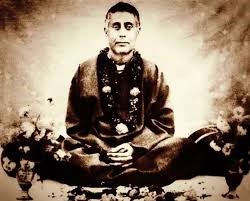
Parents – His father, Narayandas Raina, the first person to have introduced houseboats in the Kashmir Valley. His mother’s name was Arnyamali Raina. He was the fifth child in a household of four boys and five girls.
Childhood – At the age of five he was introduced to the path of spirituality by his elder brother Maheshvaranath. Up to the age of eight his spiritual progress in the lineage of Kashmiri Shaivism was monitored by his family priest (Guru), Pandit Swami Ramji, and later by his chief disciple Swami Mehatab Kak. At the age of 19, it is said, he experienced a clear taste of Self-realization. Shortly afterwards he left home, as he wrote, “in search of the Supreme” and moved to the famous ashram of Sadhamalyun (Sadhuganga) in Handwara. Persuaded by his father to return to Srinagar, he continued to study Sanskrit and Shaiva philosophy under the guidance of a scholar named Maheshwar Razdan.
Contributions – Swamiji’s contribution to the promotion of the studies in Kashmir Saivism, propagation of the Trika philosophy and growth of Kashmiri culture will be remembered for long. Swamiji, however, became known nationally and internationally as the best exponent of Trika philosophy. The saint- scholar gained spiritual ecstasy of Jivanamukta (liberated while living) and in his own country came to be known as ‘the sage of Ishaber’ to whom all sorts of people – young and old, male or female – came to pay obeisance and receive blessings or a blissful touch.
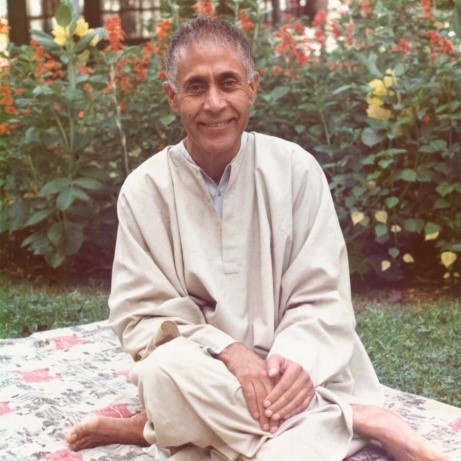
Endowed with a magnetic personality, divine charm and wide scholarship behind his spiritual attainments Saivacarya Iswara Swarupa Sri Swami Lakshman Joo was an inextricable combination of life and religion. By years of study and contemplation, his practice of yoga had ripened to such an extent that his teachings contain the best solution to the problems that face humanity today. His very presence was solace to the depressed, hope to the forlorn, joy to the seeker, inspiration to the scholar and satisfaction to the soul striving for spiritual upliftment. The best in him was all-lovingness that attracted towards him people of all faiths and of different creeds. An embodiment of magnificent qualities, he was a faithful friend, a benefactor brother, a fondling father, a true teacher, a noble neighbor, an instinctive instructor, an affirmed administrator, a congenial companion and above all the girdling guide of all who came near him. His disciples and admirers sought to throng around his radiant personality as honey-bees hover about a fragrant lotus in bloom. Iswara Swarupa’s sagacity made him into an exemplary sage.
He was a master of occult powers; he never made a display of those powers. Swamiji was against their being used as he was convinced that the use of occult powers was an impediment on the spiritual path. He was the master of self- control and care. However he appeared to have made use of his divine power sparingly and with great caution. Not only his close disciples but also un-acquainted people of different beliefs, from far and near, some of whom had not even met the Swami in person, were convinced of his powers which he might have used un-assumingly for their upliftment. It was also observed that he gave a healing touch to those who needed it. Common people believed him to be a redeemer from evils. Some persons of pure heartfelt a current of mysterious joy running through their body while receiving his touch on bowing at his lotus feet.
References:
http://www.ikashmir.net/lakshmanjoo/article1.html